
“The moral life of man forms part of the subject-matter of the artist, but the morality of art consists in the perfect use of an imperfect medium” [Oscar Wilde, The Picture of Dorian Gray].
Stephen Dorff’s growling black Ferrari shields its driver from the yellow California sun like a pair of overpriced designer shades. Sofia Coppola’s fourth feature film, “Somewhere,” is bright, hopeful and full of vitality — all things its central figure is not. Dorff plays Johnny Marco, a global movie celebrity whose star is on the wane. His morning routine is equal parts private strip show and Propecia treatments. Lacking concrete life goals his main pursuits are bagging the nearest cocktail waitress, driving his Ferrari in endless literal circles and drinking himself into oblivion. Only arriving at his middle life, Mr. Marco is already awaiting, albeit subconsciously, death.
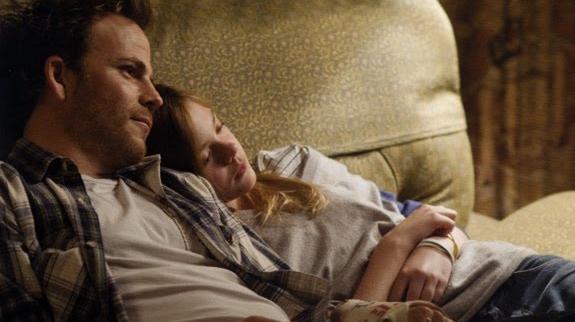
This opaque, cyclical shroud of meaningless sex, emotional isolation and being on the receiving end of hollow celebrity worship is torn open when Johnny’s estranged wife goes AWOL leaving their young teenage daughter (Elle Fanning) in his care indefinitely. The following weeks are a fascinating and touching revelation of humanity and the forging of a precious family bond.
Coppola’s filmmaking style is what I like to call “breathing still-life.” Cinematographer Harris Savides’ camera is relentlessly still, lingering on most shots ten to twenty seconds longer than you would expect. If a particular frame lacks drama, Coppola waits until it develops. This abnormal patience leads to some of the film’s best moments. When Johnny’s head is covered in mold-making goo, presumably for a movie role, Coppola refuses to cut away, and over a span of several minutes, zooms in on the holes left for his nostrils. There is silence, except for the sound of his soft, measured breathing, which works as a subtle, poignant symbol of the character’s burdened, but newly hopeful life. Filmmakers toil endlessly to create moments like this, and consider it a success if a film ultimately has one or two. “Somewhere” is full of them.
After an under-appreciated foray into 18th century French pop culture with 2006’s “Marie Antoinette” Coppola has returned to the melancholy anti-hero vibe of 2003’s “Lost in Translation.” “Somewhere” is conspicuously similar to that film; so much so that it could be considered another chapter in the same volume. But this indie-tinged tale of hollow achievement stayed by intense human connection is fundamentally different, and has something altogether different to say. The father-daughter dynamic, while implicit in “Lost in Translation,” is literal here, allowing Coppola the freedom to tell a more personal story with the glowing Elle Fanning as her proxy. Dorff and Fanning soar in the film’s static environment, which mirrors Johnny’s comfortable idleness.
Not for the manic, video game personality, “Somewhere” is a brilliant, breathing still-life — a disciplined European minimalist picture with a big American heart. Another notch in an impressive belt that must have daddy Coppola beaming.


