
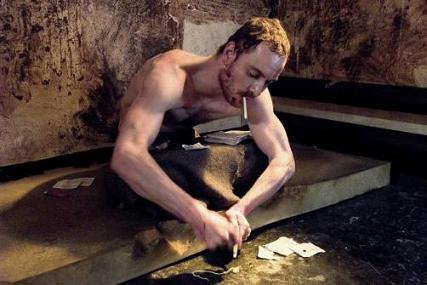
It is a fascinating thing to witness brilliant artists evolve as their ambitions swell.
Director, Steve McQueen, is an unique artist known for his provocative, minimalist, avant-garde, black and white shorts like “Bear” (1993) and “Deadpan” (1997), both of which defy convention and challenge their audiences. “Hunger,” McQueen’s feature debut, depicts the visceral tale of Irish Republican Army hero/terrorist/martyr Bobby Sands’ hunger strike in the early 1980s with staggering acuity, and marks his continued progression as an artist, and emergence as an important filmmaker.
In 1981 Bobby Sands starved himself to death in defiance of the British State and as a tool to excite public outcry at the horrifying conditions prisoners were subjected to in the famed H-block of Belfast’s Maze prison. 10 of Sands’ fellow inmates suffered the same fate. Such intense belief in and commitment to a cause is a fascinating, but land-mine-laden subject for a film. A lesser director might be swept away by such an emotionally captivating story and romanticize, even revel in the supposed martyrdom of such a figure. McQueen wisely avoids such indulgences, refusing to take sides.
“Hunger” objectively tells Sands’ story, not as a document of fact or in the tired vein of a biopic, but as a deeply disturbing sensory experience. Unusually long takes are pervasive and dialogue is conspicuously absent throughout the film with two notable exceptions: one a 17 minute long single-shot exchange between Sands and a priest, and two, a doctor explaining the hellish effects of starvation on the human body to Sands’ parents. The first is a firestorm of impassioned, practical debate about the merits and effectiveness of a hunger strike that is interestingly devoid of religious connotations, and the second accents the devastating and implacable tableau of Sands’ slow and agonizing death.
The odd and excruciating beauty of the film is the result of McQueen’s obsessive control of every detail of every shot. The environment these characters live and breathe in is meticulously crafted and shot in such a way that evokes in the audience sympathy, understanding, and contempt for both sides of the conflict. And it is made apparent that deeply rooted morals, intense motivation, loyalty, and genuine desires for liberty, and humanity aren’t lacking on either side. But impressive as McQueen’s direction is, a key to the film’s success can be attributed to Michael Fassbender’s daring performance as Bobby Sands.
Fassbender portrays the uncompromising IRA leader with a riveting earnestness that embodies the troubling beauty of McQueen’s filmmaking. Much will likely be said about his shocking physical transformation from a muscular, athletic man into nothing more than dehydrated skin and brittle bones, but the real magic is in the remarkable, Oscar-worthy infusing of his character with real nuance, passion, and conviction.
“Hunger” is a disturbingly realistic plea for humanity with little time for cliche.
Score: 5/5


