
- Eadweard Muybridge (Tate Britain, 8 September 2010 – 16 January 2011)
- Wildlife Photographer of the Year (Natural History Museum, 22 October 2010 – 11 March 2011)
The place of photography in the evolution of cinema means that there is always some reason for speaking about the two art forms together. Of these two exhibitions currently on in London, the specific relevance to cinema is obvious for the first, and not so obvious for the second. Eadweard Muybridge is best known for his series of photos which he used to study animal motion. By devising a method for taking photographs in very close succession, he was able to break down movement into its smallest parts, not normally distinguishable by the human eye. Perhaps his most famous series are of galloping horses, which he used to answer the question: is there a moment when all of the horse’s feet are off the ground at once? (Yes). Of course, the exhibition at the Tate includes many of these photographs in series, featuring horses, humans and other animals. Muybridge is considered one of the fathers of cinema, not just because his photographic innovation was an important step in the development of motion picture cameras. He actually had some images from his series painted onto glass discs which could be projected on the wall, an early form of cinema (the Tate exhibition includes a re-creation). Delightful as this was, this exhibition of Muybridge’s work predicted the magic of cinema in far more diverse and unexpected ways.
Muybridge produced many ‘stereographs’ a type of photographic print in which two almost identical images are printed side by side on paper the size of an elongated postcard. When the viewer looks at these photos through a special lens, it creates an illusion of depth. The exhibition included several of Muybridge’s stereographs, most with small pair of glasses hanging alongside so that visitors could experience the 3D effect for themselves. It felt uncanny to see what we normally think of as a modern special effect imposed on an image taken more than 100 years ago. Peering at these minute images, I felt as though I was there in the forest with the North American native people of the 19th-century: an old-fashioned still image brought to life in this way was far more impressive than most modern 3D movies. Throughout this exhibition it was easy to forget that Muybridge was not a man of the 20th century: he was born in 1830 died in 1904. It is a shock to see his photographic series of female nudes alongside those of clothed women, as the latter’s style of dress immediately marks the photos as Victorian. When you see Muybridge’s series of female nudes smoking in bed or ascending staircases against the graphic background which he used for measuring his observations, you feel as though you are looking at photos from the 1920s or 30s: in fact, these photos were taken nearly half a century before.
Although many of Muybridge’s photographic series capture different stages of a motion, other less well-known sets of photos display just one stage of an action captured from several different angles at once. One such set of photos show a man jumping straight up in the air: the exhibition notes claim that this photo inspired one element of style in The Matrix, where the camera captures an action from many different angles by circling around characters as they move in slow motion. The notes also comment on the cinematic sensibility which characterises one of Muybridge’s still photos of the grand military reception he received in South America. For me, there was a greater sense of cinematic grandeur in another of Muybridge’s innovative types of photo: his ‘mammoth plate’ views of the Yosemite Valley. These large photos are more impressive than they first appear: modern audiences used to photographic enlargements will assume that these photographs are blow-ups. At that time, however, the technique of enlarging photos had not yet been invented: to take these large photographs, Muybridge had to carry glass plates of the same size to far-flung locations which were unknown to most Americans. If cinema as we know it today had been invented then, in Muybridge we might have had an early Ang Lee.
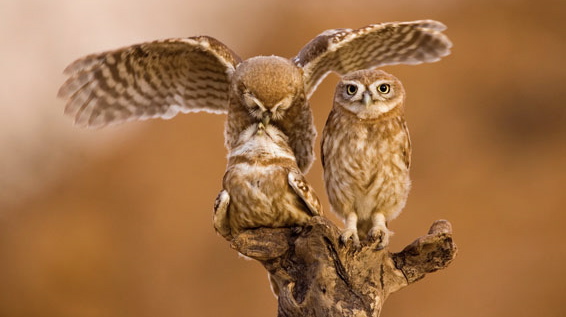
Speaking of whom, I’ve inadvertently given a hint for a game I’m going to ask you to play. Take a look at the following three photos from this year’s Wildlife Photographer of the Year Exhibition. What movie do they make you think of? Answers at the end of this blog.
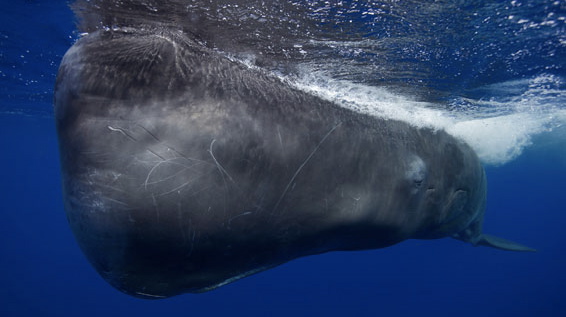


Need a hint? The first is by a Hungarian director, the second is a recent animated film, and I’ve already given the hint for the third. Interestingly, one of the most successful photographers at this year’s exhibition is Hungarian. And there have been many photos at past Wildlife Photographer exhibitions which have made me think of György Pálfi’s innovative Hukkle (2002). Examples of a national eye for nature’s lyricism?
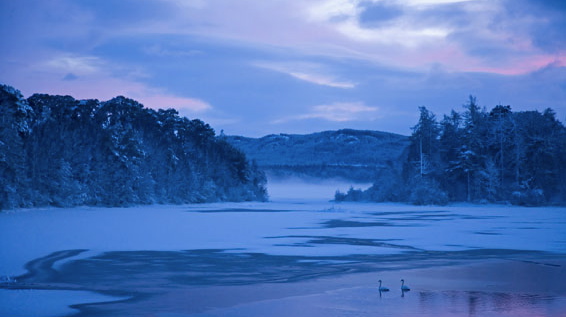
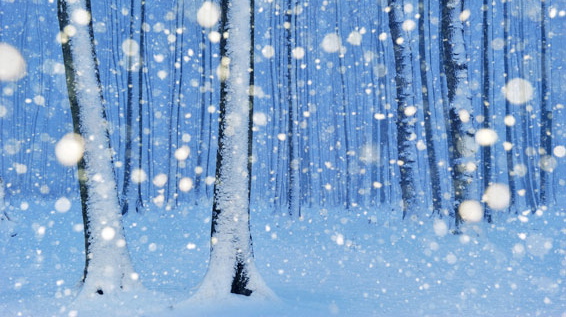
In past years, the photographs I’ve loved best at the Wildlife Photographer exhibition have been those which inspire a narrative: shots which look like the an image that could accompany a fairytale or a science fiction story. This year, it was landscape photos that seemed to have the most narrative resonance. Wouldn’t you love to see a film that opened with an image like these two?
Answers to the game:
1) Werckmeister Harmonies (Béla Tarr)
2) Legend of the Guardians: The Owls of Ga’Hoole (Zack Snyder)
3) Crouching Tiger, Hidden Dragon (Ang Lee) or Hero (Jet Li)
The Veolia Environnement Wildlife Photographer of the Year is owned by the Natural History Museum and BBC Wildlife Magazine.


