
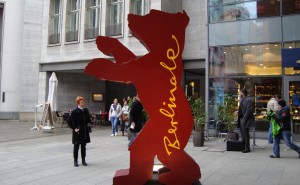
The general mood of journalists at the 61st Berlin Film Festival was disappointment: reports generally characterised the selection as dismal. The Independent’s Jonathan Romney explained that the festival tended to ‘test your tolerance for the worthy’, just like every other year. The term ‘worthy’ makes the films sound depressing and dull, but as Romney also observed, the Berlinale had ‘no lemons’: many films looked at real-life problems in a new way and so, for my part, I typically left the cinema feeling stimulated and uplifted rather than sad or irritated.
It seems that the festival juries, too, found plenty to praise: of the nearly 400 films in the festival, 45 won awards. The ceremony for the 61st Berlin Film Festival took place on Saturday, Feburary 19th, and while the full list of awards is too lengthy to summarise in detail, the following should provide you with a nice list of films to look out for at your local cinema in the coming 12 months.
The Golden Bear, the festival’s top prize, went to Nader and Simin: A Separation (Jodaelye Nader az Simin), directed by Asghar Farhadi, who first gained international notice two years ago with About Elly. Nader and Simin is about a middle-class couple and their daughter: wife Simin wants to emigrate but husband Nader wants to stay in Iran with his father who has Alzheimer’s. Simin’s decision to divorce, combined with an unexpected run-in with the father’s carer, provides the drama in this film.
This year’s Berlinale was marked by outspoken support for artistic freedom in Iran. The festival called particular attention to the case of Iranian director Jafar Panahi, whose imprisonment in Iran prevented him from serving on the festival jury. The decision to give the Golden Bear to an Iranian film need not be interpreted as a political statement, though: Nader and Simin can clearly stand on its own, as shown by the multiple awards it received on Saturday. In addition to Silver Bears for its actor and actress ensembles, the film was also awarded an Ecumenical Prize by an independent jury, while its popular appeal was proven by prize from readers of the Berliner Morgenpost newspaper.
The Silver Bear went to Béla Tarr’s The Turin Horse (A torinói ló, mentioned in my Berlinale preview blog). The film was inspired by a well-known story about Nietzsche who, when he saw a horse being whipped by a coachman in Turin, threw his arms around the horse’s neck and cried: normally, this story is relevant as it signals the philosopher’s psychological decline. Tarr instead uses this film to explore the difficult existence of the horse, the coachman and his daughter. Although the film was described as bleak, reviewers were enthralled: with just 30 shots in 146 minutes, and almost no dialogue, Tarr’s imagery had to truly live up to its transcendent reputation. In addition to the Silver Bear, the film also received independent recognition with the FIPRESCI prize, awarded by the International Federation of Film Critics.
Ulrich Köhler won a Silver Bear for best director with Sleeping Sickness (Schlafkrankheit). The film centres on a German man who develops a deep connection to Africa while managing a programme to combat sleeping sickness: his wife and daughter, meanwhile, remain more connected to their homeland (this sounds a little like an inversion of Nader and Simin…a modern theme of the competing demands of internationalism, perhaps?).
A Silver Bear for best script went to Joshua Marston and Andamion Murataj for The Forgiveness of Blood, a story about a blood feud between two families in Albania. The local traditional rules of such feuds require that all male family members stay in the house until the dispute is resolved: the film derives its dramatic power from a contrast between the opportunities that this opens up for young female family members, while the men’s lives are put on hold.
Silver Bears for camera work and production design went to Wojciech Staron and Barbara Enriquez, respectively, for their work on Paula Markovitch’s The Prize (El premio), a film based on the director’s own childhood experience of fascism in 1970s Argentina. Variety was largely dismissive of the film, calling it an ‘enervating, over-aestheticised mood piece’, while even reviewers who gave the film more credit admitted that there were long stretches where nothing happened.
A Golden Bear for Best Short Film went to Night Fishing by Park Chan-wook and Park Chan-kyong, another film mentioned in my festival preview blog. The Teddy award for best feature on an LGBT theme went to Marco Berger’s Absent (Ausente), the story of a high school student who seduces his unsuspecting gym teacher.
Crystal Bears were awarded by two juries, made up of children and adolescents, to films aimed at their respective age groups. The children’s jury gave a Crystal Bear to The Liverpool Goalie (Keepern’n til Liverpool) by Arild Andresen, a film about a risk-averse 13-year-old who has to confront his multiple fears to get the attention of the new girl at school. The youth jury awarded its Crystal Bear to Andrew Okpeaha MacLean’s On the Ice, a film which also won the €50,000 Best First Feature award in the festival as a whole. With its Alaskan setting, the film had to be a powerful one to have appealed so strongly to children and adults alike: there would be little in this landscape to distract the audience from weaknesses in other aspects of the production. The narrative concerns a pair of indigenous friends who have a fight with another boy while out hunting, and have to pretend that it was all an accident.
Finally, I’d like to highlight a few of my personal favourite films that won independent prizes. The Matchmaking Mayor (Nesvatbov) by Erika Hniková was awarded the Tagespiegel Readers’ Prize, Céline Sciamma’s Tomboy won the Teddy Jury Award, and Bujar Alimani’s Amnesty (Amnistia) took the C.I.C.A.E (International Federation of Art Cinemas) Prize in the festival’s Forum section. Although it would have been nice if an award of some kind had also gone to Jeon Kyu-hwan’s Dance Town, Michel Ocelot’s Tales of the Night (Les Contes de la nuit) and Wolfgang Murnberger’s My Best Enemy (Mein bester Feind), it was good to see the other three outstanding films receive the recognition they deserve.


